


Interview with Justice League Writer Keith Damron

Updated: 5 minutes ago
Aglets Are Sinister presents its first original interview with the freelance Justice League writer.
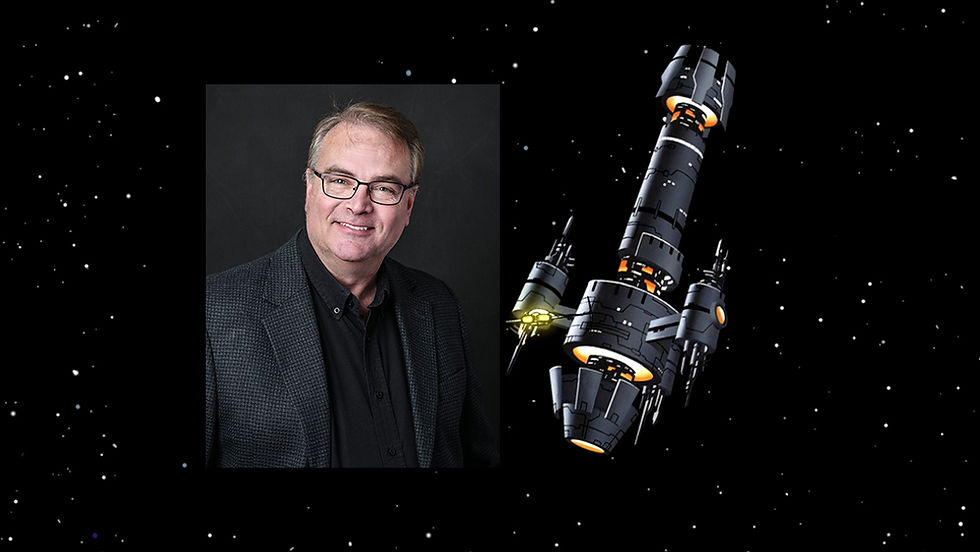
A writer and longtime veteran of the entertainment industry, Keith Damron has the distinction of being both a gentleman and a scholar. Getting his start as the Community Programming Director for Wyandotte Municipal Cable TV, he soon moved to Los Angeles and found work at E! Entertainment Television as a production engineer. Later, he became a freelance television writer, working on science fiction shows such as Sliders (1995-2000)—he would also become a story editor during Season Five—and Cleopatra 2525 (2000-2001). In 2002, he returned to his alma mater, Eastern Michigan University, and he became a professor in their School of Communication, Media & Theatre Arts department but, in between classes and student conferences, he still found time to freelance, and it was here where he penned the Justice League episodes “A Knight of Shadows” and “Hearts and Minds.”
Recognizing that I had limited material on those episodes for my case files, I reached out to the good professor with a handful of questions about his DCAU contributions. I expected, at best, a returned email, but instead he graciously sat down with me for a Zoom conversation on October 2, 2026, where we not only discussed his work but also his experiences in the entertainment industry, the freelance writing process, the complicated nature of generative A.I., and even his ties to an abandoned Justice League Unlimited episode.
* * *
JOSEPH DAVIS: You initially wrote for live action. How did you get started?
KEITH DAMRON: Well, there are long stories, and there are short stories. Maybe I’ll find somewhere in the middle. You decide you want to become a screenwriter, and you start reading, you start writing, you start developing the craft. Literally, you spend years developing it, and then, one day, when [I was] ready, as it were, I pulled up, moved to L.A. and started making the rounds. I did have an initial contact, which got me into Sliders, which led to a freelance assignment, which led to another one, which led to a staff assignment.
One feeds on the next—you meet people, you get better as you go, and you network. And, hopefully, you create a sufficient network that will lead you to other opportunities because, in television, you’re always looking for your next job. And even if you are on a staff or you’re a writer / producer—even on a long-term series that will last a few years, which is considered long-term—you’re always looking for your next job, so you’re always meeting people and always looking to develop the craft as well. Because […] if you create contacts [and] your writing is on par, that’s not going to get you anywhere. You still have to prove yourself.
It’s also about your creds—your credentials, what you’ve done. One leads to the next, leads to the next. I always say—from at least my perspective, but I think most writers’ perspectives—the credits are first and the money is second, if you want to keep working.

Sliders and Cleopatra 2525 courtesy of Comcast, Universal Television, St. Clare Entertainment, and Renaissance Pictures.
DAVIS: So, you got started on Sliders—according to your IMDb, you started on Season Four as a freelancer, and then you went onto become a story editor for Season Five.
DAMRON: Right.
DAVIS: And you also did some work for Cleopatra 2525. What prompted the move to animation? What was your “in” for getting into Justice League?
DAMRON: It wasn’t really a move. You go where the work is or you go to find work. And, initially, when I first got to L.A., one of the first things I did was start cold calling. I picked up the phone and just called Alan Burnett one day over at Warner Bros., and he was kind enough to take my call, and he was really super kind to take me to lunch. We met; we talked. There was nothing for me at the time, but I got to know him a little bit.
[In the industry], you have this thing called an agent who, in theory, is supposed to find you work and opportunities and, shortly after Sliders and Cleo, I got a meeting with Warner Bros., and it’s like, “Yes! Yay!” because that’s what I wanted in the first place (I mean, I wanted other opportunities as well). I started watching Batman: The Animated Series when it first came out, and then I moved out to L.A. and was watching Superman, and it’s like, “These guys, they’ve got something. They’re doing a tremendous job. Really good, solid writing.” I wanted to be part of that because I’ve been reading comics since I was, like, eight-years-old.
DAVIS: What were your main interests in terms of comics? Did you have particular books, particular characters, or particular writers you followed?

DAMRON: I was more of a DC person and then worked my way into Marvel. I think when you’re younger, at least at the time back then, you gravitated more to DC. The Marvel stories were more, shall we say, sophisticated stories. You know, it’s the story of Stan Lee and how the stuff that he wrote found its way into college campuses, yada yada yada. So, I started off in DC and, of course, […] I loved Batman. I started coming into the comics also at a time when DC was trying to distance itself from the camp, ‘60s stories. You know, going into the harder edged stuff, which I appreciated, and that’s where my appreciation for Batman as a guy in a suit with gadgets to it and tremendous skills as opposed to, you know, the Golden Age—I’m sorry, not the Golden Age.
[NOTE: Keith is most likely referring to the goofy Batman of the 1950s and ‘60s prior to Dennis O’Neil and Neal Adams’ reinvention of the Dark Knight, beginning with Detective Comics #395 <December 1969>.]
That really appealed to me, so I love Batman, and my second favorite is Green Lantern. I just love the concept of a galactic police force and the whole idea of the power ring and that there were other Lanterns. Fortunately, I had the opportunity to write stories with Batman and the Lantern, which was an absolute joy. I loved it.
DAVIS: Excellent. So, you met Alan Burnett, and then you got an interview with Warner Bros. Forgive me for asking, but who was in the room? Was it Bruce Timm? Was it Rich Fogel and Stan Berkowitz?
DAMRON: It was Rich and Stan. That was my first—no, no, that wasn’t my first pitch meeting with them. My agent sent me in what I thought was a meet and greet, which means you go in and you meet them. And so, I was like, “Oh, I got to know them through a little bit of conversation.” And then they turned to me and said, “Okay, what have you got?” And I’m like, “What? This is a pitch meeting? I was told it was a meet and greet!” It was totally embarrassing.
DAVIS: Wow.
DAMRON: I should have known better, though.
DAVIS: It happens.
DAMRON: You always have something, and I didn’t, and I was probably too green to realize that at the time, but they were nice enough, saying, “Well, let’s reschedule.” So, I was back in a week and ready to go. I had … I don’t know, my modus operandi is usually five pitches and three one-liners. Are you familiar with the process of what pitching is?
DAVIS: Not on a professional level, but I have some idea.
DAMRON: Okay, you go in, and you tell stories that are broad in concept and centered on some aspect of the character, and that hopefully has some kind of twist, something that the recipients—in this case it would have been Rich and Stan—have never heard before. They’re looking to you to present them stuff that they haven’t thought about yet and to be dazzled. And the tricky part is you’re looking to provide that for them, but you’re not in the room or in the offices on a day-to-day basis, so you don’t know what they’ve talked about yet. You don’t know what they’ve accepted, and you don’t know what they’ve thrown out, so you’re just kind of depending on your knowledge of the product, the franchise, and oftentimes outguessing, or at least throwing something their way that will make them do something like this. So, there’s a level of improvisation to it—you take your existing comic book knowledge, you create the concept, and then you think on your feet.
When they’re sitting on the other side of the table, if they’re just sort of sitting there, and their eyes are glazing over, you know that you’re not connecting. You know you’re connecting if they start taking notes, and you know you’re connecting when they kind of go, “Okay, that’s interesting.” And you know you’re connecting when they go, “What about this?” And when you get the “what about this,” that’s special because you’ve latched onto something that perhaps they’ve not thought about or that appeals to them, which is why it’s so important to understand the concept of a basic pitch, and I’m working with my students on that now. It’s, like, just the broad strokes, give me the high points, give me something that will dazzle me and catch me.

And then the other tricky part is—there’s so many moving parts; many tricky parts—you’re not married to your material. When I pitched “A Knight of Shadows,” it wasn’t that story at all. I was pitching a story, which always fascinated me—I love Arthurian lore. You’ve got the book The Once and Future King, and I’ve always been fascinated by the “future” part.
DAVIS: Okay.
DAMRON: Like, Arthur is going to come back, and [DC Comics] kind of did that. There was a comic called Camelot 3000, which I never read. I think I read a couple, and it’s like, eh.
DAVIS: Yeah.
DAMRON: But I wanted to do something like that, where Arthur and Gawain and Lancelot return, and they meet the Justice League, and there’s a misunderstanding, and Arthur and his knights think the Justice League are an infestation on Earth. And that is the story I pitched and, if you’ve seen “A Knight of Shadows,” it doesn’t resemble it whatsoever. But, at the same time, there is that seed of … there is that seed of the story, though. And, at the same time, they are at a point where they’re always looking to “okay, how can we bring this DC character into our series?” or “how can we integrate this villain?” So, they’re looking at the standpoint, from my story, that can … how can they finesse it for their needs? And that’s when the idea of the Demon comes in.
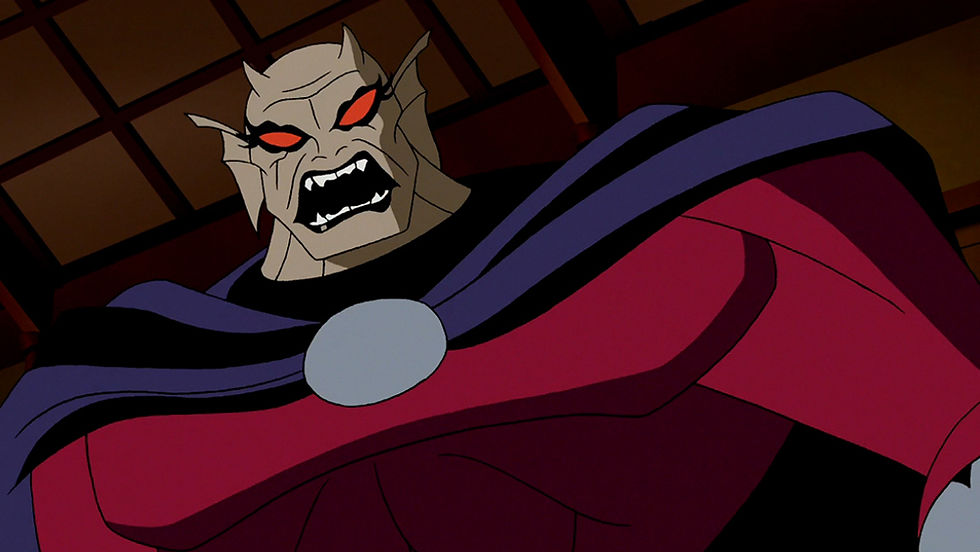
You’ve still got the Arthurian elements, but it’s Morgaine Le Fay. Arthur’s not even there. Merlin is like a guest cast shot. That’s not my story at all, but the dumb writer is the writer that says, “No, that’s not my story.” The smart writer is the writer that goes, “Yeah, I like that.”
DAVIS: Okay.
DAMRON: So, they’re taking my pitch and fitting it to their needs. It’s their show.
DAVIS: Of course.
DAMRON: And the writers coming in have to realize that it’s not your show, it’s their show. And you have to give them what they need. Be very flexible because you will be rewritten. And don’t try to make any major changes to the story or the characters because if anybody gets to do that, it’s them. You look at any of, you know, the Star Trek shows—I mean, the good ones—and look at the big set piece episodes, the two-parters. They’re always written by the hyphenates, the writer-producers. That’s their playground. They get to play in it. Freelancers provide filler. And if you get lucky enough to make that mark consider yourself blessed because you become part of that franchise, or that series, in a small way. But a way nonetheless.
That’s a long answer, isn’t it?
DAVIS: It is, but it’s very informative. I’m just hanging on every word here. So, you pitched “A Knight of Shadows.” Was that the original name? I heard a rumor a couple years back that the original name for the episode was “The Demon Story.” Is there any truth to that?
DAMRON: I think that was probably the working title.
DAVIS: Okay.
DAMRON: And, you know, it’s just, like, I pitch my story, and they go, “Okay, we like this, do this, do this, do this, do this, bring in this character, bring in the Demon,” and it’s, like, “Okay, I’m taking notes, I’ve got my recorder going.” I go home, and I write a treatment for it, and right now it’s called “The Demon Story” because that’s the working title, and there’s usually a serial number attached to it for accounting purposes. It came back to me as “A Knight of Shadows,” so they came up with the title.
DAVIS: Okay, so you came up with the pitch for Arthurian legend, and through working with Rich and Stan it developed into a story featuring Etrigan the Demon.
DAMRON: Yeah. Bruce wasn’t in all the meetings. I remember him being in one or two, and I don’t remember specifically which ones. I think most of the time I was dealing with Rich and Stan.

DAVIS: Who were the two staff writers at the time. So, it was Etrigan the Demon, but it was also a spotlight for the Martian Manhunter, J’onn J’onzz. Were you familiar with both characters going in?
DAMRON: Sure.
DAVIS: Did it involve any additional research beyond what you’ve already read about them?
DAMRON: No. I knew the characters. As a matter of fact, I think somewhere in a box I probably got the first appearance of the Demon in the comics. It’s probably tattered and torn but, yeah, I knew of them.
DAVIS: Aside from the material with King Arthur, was there anything that you pitched in the original draft that got shot down or maybe changed to its current form?
DAMRON: That was the only sale. Everything else … everything else but one thing got shot down. […] Pardon me for a minute. I’m looking; I just saw it.
[KEITH DAMRON WALKS OFF CAMERA, AND HE RETURNS WITH A COPY OF RED JUSTICE, THE BANTAM BOOKS JUSTICE LEAGUE TIE-IN PAPERBACK PUBLISHED IN MARCH 2003. IT WAS WRITTEN BY MICHAEL TEITELBAUM.]
There you go. I pitched an idea called Red Justice, where there was a Soviet Justice League. I pitched the idea, they didn’t go with it, and I get a call from Rich—like, I don’t know—weeks later. They liked the story. It wasn’t going to be a script, but it was turned into a juvenile book.
DAVIS: Oh, wow.
DAMRON: So, I got a little money for it and some free copies. I didn’t get to write it, but I got a little credit at the bottom there. That was kind of fun.
DAVIS: I remember those books. So, that was actually a completely different pitch from the meeting.
DAMRON: Yeah. My system is … if you can encapsulate the story, one-page, single space, then you need to work at it. You need to be able to economize, again, the broad strokes. What’s the concept? What’s the characters? What’s their problem? What’s the subtext? And what’s the spin? And the spin is “what can I do that’s different that they haven’t seen or heard of before? And you’re always looking to put your characters in a different setting. And the beauty of Justice League was [that it] was really an hour show. But it was two half-hour episodes. […] And what that allows you to do is really delve into the characters, which is something I’ve been passionate about.
As I said, I grew up watching the campy Batman and not really liking it, [though] I’ve come to change my attitude toward it for various historical reasons. And then I grew up with ‘70s television, and we had that Spider-Man TV series and those awful pilots of Captain America. And just standing by the TV groaning, “When will they give us something that’s Stan Lee-esque?“, if you will. […] And so, here we are, post-’89, and the studios are finally going, “Oh, Batman. Dark. Complex. Maybe we should go there.” And then that’s when you started seeing more mature stories. Obviously, the pinnacle today is what they’ve done with The Avengers, but I was hungry for sensitive stories about the characters, and now I had the opportunity to do it, and I’m, like, “Great!” Thank you, Warner Bros., you know, for doing this, and now thank you for allowing me to participate and be a small part of that world.

DAVIS: Okay. Getting back to the episode, you mentioned that you’re very much a fan of Arthurian lore. You were the one that pitched the idea of Jason Blood being the betrayer of Camelot, because I—
DAMRON: No, that was their idea.
DAVIS: Oh, it was!?
DAMRON: Yeah. Again, you’re a hired gun. You’re presented an idea. “Here’s my basic idea.” And they go, “Okay, this is what we want.” And you go, “Okay, you got it.”
DAVIS: Interesting. I was just curious because, no matter who came up with it, it was a brilliant idea, but it was definitely a deviation from the original source material.
DAMRON: Mm-hmm.

DAVIS: What about the angle with … I know they had the whole story with Harv Hickman and Henry Moss. Obviously, Harv Hickman was kind of a Hugh Hefner-esque character but, I don’t know, the picture—I know this is kind of an art department angle—but the picture of the two of them almost kind of look like Stan Lee and Jack Kirby, and the story of the Philosopher’s Stone, and how Harv Hickman kind of took it, kept it himself, and profited off of it. It was almost like this weird kind of Stan Lee / Jack Kirby angle, where Jack Kirby did not receive the same amount of credit as Stan Lee did for his contributions to early Marvel. [PAUSE.] Am I reading way too much into this?
DAMRON: Probably. As a matter of fact, I never really made the visual connection to Jack Kirby until you mentioned it now. Harv was Hugh Hefner.
DAVIS: Yeah, yeah.
DAMRON: That was it. And I thought that was kind of pushing it there just a little bit but come to find out we’re on Cartoon Network.
DAVIS: Okay.
DAMRON: We’re not on Fox Kids, so we can push it a little bit. As a matter of fact, it was later told to me that there’s this shot of Wonder Woman, and it’s a bit of a beauty shot, where she does this pirouette turn, kind of sexy, and they told me that they did have to cut that because it was kind of […] they were, you know, trying not to sexualize it too much. But there were other things that got in, that either got by people, or Cartoon Network went, “Eh, okay.”
DAVIS: I know the shot you’re referring to.
DAMRON: Yeah, yeah. So, you get a little chuckle off that. But, again, grateful for the fact that you can push things a little bit. I was really surprised that a couple of my lines in “Hearts and Minds” got through.
DAVIS: Oh, really?
DAMRON: There was, you know when John and Katma reunited.
DAVIS: “Do you still snore?”
DAMRON: Yeah, yeah. It’s like, “That made it through. Okay, I’ll take it.” You know?
DAVIS: That was one of the advantages of not doing children’s television.
DAMRON: Yeah.

DAVIS: Okay, so “A Knight of Shadows” was a big hit, and you came back for—did they reach out to you for “Hearts and Minds,” or did you have another pitch meeting?
DAMRON: I had another pitch meeting. Bombed on all of them, and then they gave me “Hearts and Minds.”
DAVIS: Okay, so “Hearts and Minds” was … they’re just like, “We need a Green Lantern story?”
DAMRON: I think that’s what happened. They wanted a story with John, I think they wanted Katma, and they definitely wanted Despero. And it’s like, “Okay, let’s do this.” It turned into “Hearts and Minds,” which—as you mentioned in your questions—is kind of a commentary on brainwashing cults, and that’s always fascinated me: mindless followings, whether it be from today or years ago. I think my—one of my big frames of reference was David Koresh. That was actually more recent to the time because … that was like what?
DAVIS: A few years back, yeah.
DAMRON: ’99? I mean, it was—yeah, it was the nineties.
[NOTE: David Koresh was the cult leader of a religious sect called the Branch Davidians. Accused of polygamy and child sexual abuse, he died—along with his followers—during the FBI raid of his compound in 1993.]
But then there’s, like, a template that you can place over mind control cult stories, and they kind of follow the same [patterns]. And then, of course, the spin you give to it, that’s all on you. In this case, it was the Despero cult, which is kind of neat. It’s taking a DC villain and, you know, just shooting beams out of his eyes and things like that. He’s … it’s creating a society around him, with followers and rebels and … I gave all the followers and rebels my friends’ names, and “Hey, guys, watch the show. You’ll get a kick out of it!”

DAVIS: It was a fascinating interpretation of the character. One of the things I’ve noticed with the series was, obviously, DC Comics very much polices how the heroes are portrayed, but when it comes to the villains, there’s a lot more leeway to kind of customize them in certain ways. Your version of Despero was obviously a collective effort, but it was uniquely different from the comic book version, or from a version from another television series.
DAMRON: They can’t be a bad guy just because they’re a bad guy. There’s got to be a reason.
DAVIS: Of course.
DAMRON: And, I think, DC has looked back on what they’ve created in years gone by, and most of the villains were, like, you know, Justice League villains. They started taking them and giving them subtext and layers and, you know, brought them more into the modern age, and Justice League the series was able to do that very nicely.
DAVIS: Yeah, your Despero is almost like a dark Professor X or a Magneto-type character. He’s this mutant that is ostracized, and then he gains this power and subjugates that planet’s version of humanity.

DAMRON: And that was another line that I was surprised I got away with—when Despero comments on Hawkgirl’s wings, and he’s like—
DAVIS: Oh, yeah!
DAMRON: —“They give her an exotic quality, don’t you think?” It’s like, “Okay, that’s gonna get cut.” It’s like, “No, it didn’t!”

DAVIS: Wow. What was the interaction like between your writing and the rest of the staff? I know that that episode featured a lot of plot threads that were ongoing, like Green Lantern dealing with his existential issues with the power ring—his reliance on it as a weapon—and his developing relationship with Hawkgirl. Would you do a draft and get back notes, or was there information you were presented with beforehand and had to incorporate?
DAMRON: Oftentimes it’s just quick notes in a meeting. We want you to do this, we want you to do this, we want you to do this. And I don’t remember verbatim.
DAVIS: Okay.
DAMRON: But they definitely wanted the—the powering ED thing going; they didn’t phrase it as that, but … “Okay, I’ll do that. Okay.” “Work on [John’s] romance with Katma and Hawkgirl.” “Okay, I can do that.” And I think a lot of the stuff I ended up adding I think I presented in the story. You get the assignment, you go home, and you write something called a treatment, which is not a script, but the story in prose, and you bring that back. These days, it would be emailed back. Back in those days, I was driving to Warner Bros., which I absolutely loved. I hand it to them; they give it about a week. It goes up and down the chain. Everybody takes a run at it; makes notes. You come back; they give you the notes, they give you the script, you go back, and you either do another draft of the treatment, or you’re told to do what is called “going to script,” which means you actually create the script. I don’t remember how many phases that went through contractually. You’re only required to do so many; I always try to get a little extra. “Hey, we’re having a freebie on drafts today! What do you think?” And they go, “Yeah, okay.” And, again, it’s just because of the love of the work really is what drives it.
So, I think they were pretty much good with the treatment. I’m working from memory here. They gave me the notes. I went back; wrote the script. And I’m really pleased and proud to say that almost every word on the script made it to the screen. That does not happen.
DAVIS: For “Hearts and Minds.”
DAMRON: “Hearts and Minds,” yeah. Less so for “A Knight of Shadows.”
DAVIS: Okay.
DAMRON: But there were very few changes. And, you know, when I worked on Sliders, I would oftentimes do what’s called a “page one rewrite” for freelancers, which means I’m basically redoing the entire script. Or we go through, and we make changes, but [regarding “Hearts and Minds”], that […] makes me incredibly happy that it stayed that way. Not that I wouldn’t have minded changes. Again, it’s their show, but it was kind of affirming as well, I thought.

DAVIS: In addition to David Koresh, Bruce Timm has gone on record as saying how “Hearts and Minds” was fairly heavily influenced by real-world events, specifically referring to the then-current wars in Iraq and Afghanistan. The art department arguably gave the background designs of the alien world a sort of Middle Eastern aesthetic [possibly combined with Ancestral Puebloan design]. Was any of that intentional, or did it just sort of develop?
DAMRON: Well, they make the visual decisions, which include the settings, character designs, and so forth.
DAVIS: But your main angle was David Koresh; he was your main influence.
DAMRON: That was pretty much in the back of my mind, just the whole idea of John Fischer, cults in general, how people can become so enamored of someone they perceive as a spiritual leader, how they’ll do anything to follow and to see.

DAVIS: Okay. There’s also a lot of allusions to religion and mythology. Was there anything specific you pulled from—
DAMRON: No, not really. The visuals, once we got toward the end of the second episode, I thought was pretty trippy. Especially that whole … that whole thing with … with the trees, and then Despero. I didn’t write that into the script. I looked at that and went, “Oh, my God.” And I was just … my jaw dropped in those last few seconds. It was like … the vision that the artists had guided by the staff, I thought, was just amazing.
DAVIS: How did you write it in the original script?
DAMRON: I don’t remember. I have to pull the script down.

Above left: Justice League Unlimited promotional art. Above right: a Firestorm model design from Justice League Action.
DAVIS: Fair enough. Okay, let me see … later on, you would go on to write an episode for the television show The Legion of Super Heroes. It was a different network, a different crew. I think that the Kids’ WB! had just shifted over to the CW, but you may have been working—
DAMRON: Well, actually wrote another Justice League that didn’t get produced.
DAVIS: Oh, you did!?
DAMRON: Yeah. At this point, they were bringing me in and kind of giving me stuff, which was nice. And they wanted a Firestorm story.
DAVIS: Oh, my.
DAMRON: And I’m like, “Okay, that sounds great.” And we move that around.
DAVIS: Was this for Justice League Unlimited specifically?
DAMRON: Unlimited, yeah. And, you know, I wrote the script, and we had the meetings, and I got paid, and then they decided they wanted to go into a different direction, so it didn’t get produced, which is disappointing. I would have loved to have seen it, obviously, but yeah. So, that was before the Legion.
DAVIS: Okay, so this was … I do remember they were talking about a Firestorm script that eventually got turned into a Booster Gold episode; that one was “The Greatest Story Never Told.” The original bones of the story had Firestorm as the main character, and he was fighting Clayface. Was that you?
DAMRON: Yeah. Boy, I’d like to see where that [went]. I’d like to read that.
DAVIS: I could send you my notes; I’ve done the research on this. Apparently, they talked about how they were trying to do Firestorm, but they couldn’t quite crack it, and eventually they decided to make it Booster Gold. This was also early Justice League Unlimited, pre-Bat-Embargo, because Clayface was … is there anything you could tell us about the script that you wrote for the story?

DAMRON: I think it was an origin story. Ronnie [Raymond] was not Firestorm yet; he’s sort of a delivery boy to the WayneTech offices where Martin [Stein], the doctor, is working. Clayface is involved in trying to, I think, steal something. Batman shows up and reveals that Martin’s coworker is Clayface. They have it out, and then the origin story happens.
So, it’s developing that [symbiotic] relationship between [Ronnie and Martin], with Batman on the side, and the larger caper involves technology, sabotage, theft, and Clayface. It’s shorter because it’s JLU. We didn’t have time to go into a lot more depth of the characters, but I thought it worked pretty well.
DAVIS: Fascinating.
DAMRON: Yeah, it was fun to write.
DAVIS: So, you didn’t get any notes back about that specifically?

DAMRON: No, they just decided to go into a different direction. That’s probably when they—and I didn’t know about the Booster Gold change. And then no one asked me to rewrite it at some point. With freelancers, they’ll do something called “taking it in-house,” which means that they take it out of the hands of the writer. Either the writer didn’t do a sufficient job, or they just don’t have the time, or maybe a little bit of ego, or a producer has their spin and they’d rather do it. It can be any one of those.
DAVIS: I think they wanted to go a different way.
DAMRON: I don’t know. That was what they told me.
DAVIS: I was asking about Clayface earlier because of the unofficial Bat-Embargo. Batman himself was clear, of course, but his supporting characters became verboten to appear because of the Kids’ WB! show. I’ve done research on this in the past, and obviously there was a period when it wasn’t the case. There was your show, and there was another episode that was going to feature Man-Bat that got cut because of this edict that came out somewhere later into the development.
DAMRON: Yeah, I heard that, just rumors that JLU operative personnel were receiving a little more pushback, and there was a little more unrest going on there than there was in straight Justice League. And I didn’t get the details, but it’s like, “Oh, that’s too bad.”
DAVIS: Yeah, most of it was fan speculation, but there were glints and glimmers. Obviously, the show did great without those characters, but you just kind of hear little stories here and there like, “Well, the plot was originally like this before this happened.”
DAMRON: And that’s so common. I mean, I tell my students: if you want to get into this business, you will be rewritten. That’s just the way it works, and you can’t have ego, and you can’t have ownership. You can enjoy your work and do the best job you possibly can because no one sets out to write a bad script, but bad scripts happen. For whatever reason. And that could be not just a poor writer, but too many fingers. You know, one producer says, “I want this”; one producer says, “I want this”; the studio says, “Do this” and, all of a sudden, the story itself makes no sense. Seems contrived. That’s just how things work. I knew a guy who said he wouldn’t be rewritten, and he hasn’t worked since.

DAVIS: Certainly, wise words there. So, later you wrote an episode for Legion of Super Heroes. This was for a different network and specifically for “children’s television.” Was your experience writing that script different or similar to writing for Cartoon Network and for Justice League?
DAMRON: Different and similar. I went in still in Justice League mode. First off, in addition to loving Batman and Green Lantern, I love the Legion. Especially the reboot in the ‘70s that occurred, when all the female Legionnaires were in bikinis and stuff like that. And the stories were really cool. And what’s what I wrote. And, again, it was this situation: “This is what we want. Do this.” And I did it and turned in my drafts and turned in the script and then, months later, I watched it and it’s like, “Whoa. This is very different.” And as I’m watching this thing, I’m thinking, “Oh, okay. Kids’ WB!”
DAVIS: No bikinis.
DAMRON: I didn’t have anything really mature, but I thought it spoke to the smarter kids. You know, the same kind of kids who can read Peanuts and enjoy it at an adult level. That kind of thing. The humor, the life talk. And I had a running gag in there, which was an homage to Butch Cassidy and the Sundance Kid where, you know, they’re meeting up with the robots, and they’re constantly having to fight them. And one of the character’s lines—he might be Bouncing Boy—he says this three times: “Who are those guys? Who are those guys?” And I thought that would stay because it was such a cool homage, but that was gone, and it was just basically a straightforward, storied fisticuffs. And I’m like, “Okay, lesson learned.”
I gave it my best, and I was proud of the script. I don’t fault anyone; I don’t … I’m not criticizing anyone. I understand how the market works, and what they had to do, and the product that preceded it. Batman, Superman, and Justice League more than illustrates that.
DAVIS: During this time, obviously, you were working. According to your bio on the university website, you started teaching at Eastern Michigan University in 2002.
DAMRON: Yeah.
DAVIS: And you were writing the Justice League scripts at the same time. Were you writing them in office?
DAMRON: Yes, during my lunch.
DAVIS: During office hours; waiting for students to come in.
DAMRON: During office hours, yeah. You know, we’re required to publish or produce, so that was actually part of my faculty work.
DAVIS: Yep, that’s where this website came from.
DAMRON: There you go. There you go.
DAVIS: You know, some of my colleagues write about James Joyce and William Shakespeare. I write about this. Someone has to.
DAMRON: Yeah. I’ve put together courses on science fiction television, and they filled, and we had a good time and learned something in the process.
DAVIS: That’s fantastic. In a couple of weeks, I’m having my English students write essays about A.I., and there’s going to be a science fiction component to it.
DAMRON: Ah, okay. Yeah, that’s another animal. It’s mind blowing what they’re doing, and we have to be vigilant. I did an experiment.
DAVIS: Yeah?
DAMRON: I gave a brief description of a story and told A.I. to write me a screenplay. And it did, and it was crap. I was just trying to figure out what to look for. Should students use it to write their own? Definitely the nuances of screenwriting were not present—subtext, characterization. So, I’m like, “Okay, so far, so good.” But anyway, I digress.
DAVIS: Yeah, so is this what the new model is supposed to be? You get this crap from the A.I., and then you hand it over to a writer and say, “Make this art?”
DAMRON: Yeah. I was having a discussion about that with a good friend of mine. He’s formerly the showrunner of Monarch; he just left the show. And I told him what I told you, and he pointed out, “Well, you do realize that, you know, we’ve had our share of bad drafts, and as writers and story editors, it’s our job to rewrite,” which I’ve done. So, you know, I’m looking at him going, “Yeah, you’re right.” But the students don’t know the rewrite process yet, obviously. But referencing your comment about the business as a whole, yeah, I could see that as an issue.
Just the same way I’m looking at commercials now, just this morning. Virtual actors, A.I. actors. You can still tell, but for how much longer? How long? And especially those Christopher Reeves clips that I’ve been seeing. Have you seen any of those?
DAVIS: Not lately. I have seen them in the past.
DAMRON: Somebody has done some short clips with Christopher Reeve and Helen Slater, and they have written and crafted these very moving scenes between the two when they first meet each other, the dialogue they exchange in regard to their home, their origins. Another clip has Clark coming to Smallville and meeting with his mother, and another heartfelt scene. So, we’re talking about some serious, emotional stuff, so it’s not bang, bang, bang, bang, bang. It’s a lot of the stuff that hardcore fans want to see, would rather have seen. We would have rather had this than Richard Pryor and shit like that and, you know, but it’s a little scary as well because, you know, you get copyright and trademark issues. And I’m looking at some of these commercials going, “Okay, well, there’s four jobs that people didn’t have.”
DAVIS: It’s scary. Not only is it taking jobs from writers, it’s also, you know, starting to get into what is bodily autonomy?
DAMRON: Hmm, okay.
DAVIS: You know, what you’ve got is basically—in the case of Christopher Reeve, you’re basically puppeting a dead person without permission of the family. I know there have been some issues lately where, like, Bruce Willis signed away his rights to that before his illness progressed, and James Earl Jones had permitted the Star Wars people to replicate his voice for Darth Vader, but at what point do they cross the line? At what point does it stop being “you oughta be in pictures” and it becomes “you oughta be digitally edited into pictures?”
[NOTE: While James Earl Jones did, in fact, sign over rights to Lucasfilm in 2022 to recreate Darth Vader’s voice using A.I. <Lammers>, Bruce Willis merely allowed a deepfake company to create a “digital twin” to appear in a Russian advertisement in 2022; however, they do not own his likeness or “digital twin” <Sharf>.]
DAMRON: And I hear you.
DAVIS: I guess your students have some interesting takes on this.
DAMRON: Haven’t heard any yet, and I’ve kind of thrown it out there, and there’s still—I think they’re still soaking it up. I think a lot of us are still soaking it up. I mean, this hit us fast, like, within the last several months. And then, in the last six months, I’m seeing these clips come at me, and it’s like, “Whoa, whoa! Where’s this stuff coming from?” And then I start thinking, “Okay, I’ve got stories. Many stories.” The gatekeeper is Hollywood? The access without the gatekeeper is things like YouTube. Should I be thinking about that? I don’t know.
I think YouTube has become a bit of a wasteland over the years. I worked in public access for my first ten years, so I understand the philosophy and realize that YouTube is just a larger manifestation of that and needs to survive. It’s, like, you know, self-publishing. You see it, you might go through a lot before you come across a jam or something that’s worth [it]. I’m gonna read it because there’s a lot of wannabes. As a story editor, I’ve read a lot of bad scripts and, as an instructor, I’ve read a lot of really bad scripts. So, you’re always looking for that gem.
DAVIS: I’ll bet. I’d like to thank you very much for giving me an hour of your time. It was quite informative in terms of an educational standpoint, in terms of the industry, how freelance writing works, but also in terms of geek history. There now exists a kind of cottage industry with certain television shows in regard to the development process and different stages of particular episodes. There’s a podcast for the Justice League show; there are a couple of video essayists on YouTube and whatnot. It’s always interesting to get another voice’s angle on what happened, you know, twenty years ago in those offices at Warner Bros.
DAMRON: Well, there’s always the question. A lot of people ask this when they see something that they’re dissatisfied with, that they outright hate. “What were they thinking!? How did that get made!?” And, as I said before, no one sets out to make something bad, but stuff just happens. Budgets, casting, different directions, etc. And for people who love looking behind the scenes, that in and of itself is fascinating. It’s like, “Oh, is that how they do it!?”
What kind of classes do you teach, if I may ask?
DAVIS: I primarily teach college composition. I teach my students how to write college essays.
DAMRON: Okay, I do production. I work in TV studios, and we make short films and things like that. So, my job in many ways is demystification, and it’s always interesting to watch people’s eyes light up when you tell them this is how Hollywood works. This is what you need to do to function there, to get in. It’s not magic, it’s not glamour, but it’s some of the best fun you could ever have. It’s hard work, but it’s fun hard work, whether you’re on a set or whether you’re slugging away behind a computer.
There’s a definite passion, a definite love there. If you’re in it—one of my colleagues said it best: we get paid to play, and that is essentially correct. It can be frustrating. Maddening. But it’s the best job I ever had.
DAVIS: Well, with any luck, you’ve seen my eyes light up a couple of times this past hour.
DAMRON: Happy to do it.
DAVIS: Thank you very much.
Works Cited
Lammers, Tim. “James Earl Jones Signed Over Rights for AI to Recreate Darth Vader’s Voice.” Forbes. Forbes Media, LLC. 9 Sept. 2024. <https://www.forbes.com/sites/timlammers/2024/09/09/james-earl-jones-signed-over-rights-for-ai-to-recreate-darth-vaders-voice/>. Accessed 11 Oct. 2026.
Sharf, Zack. “Deepfake Studio Used 34,000 Bruce Willis Images to Create the Actor’s ‘Digital Twin,’ But It Doesn’t Own the Rights to His Image.” Variety. Variety Media, LLC. 3 Oct. 2022. <https://variety.com/2022/film/news/bruce-willis-sells-rights-deepfake-digital-twin-1235388442/>. Accessed 11 Oct. 2026.
Images—unless otherwise indicated—courtesy of Skydance Corporation, Warner Bros. Home Entertainment, Warner Bros. Animation, and DC Comics. YouTube videos courtesy of the Princess Darkseid, JoBlo Movie Clips, and FutureDcwarriorCool360 channels.


Comments